If you’re sick of French people, you should stop reading this right now. Because French people have been important to classical music, and I’m going to be talking about them a lot.
French people are, by nature, sad. And that plays into a) classical music in general and b) what I’m going to talk about today.
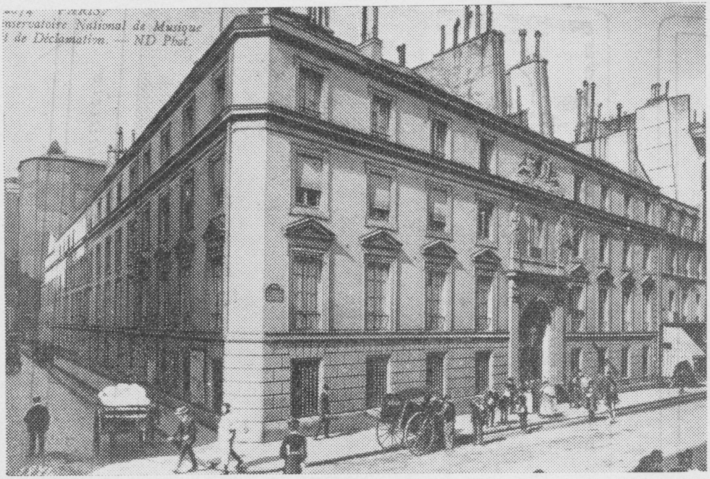
Today I will be talking about Maurice Ravel. Remember when we talked about Impressionism? He was sort of one of those guys. At least, he was a contemporary of Debussy. Like Debussy, he didn’t like the term “impressionist.” But like impressionists, he liked to do things differently. He attended the Paris Conservatory like any good little musician.
AND GUESS WHAT?
He really didn’t do anything important there. He didn’t do anything “different” or “surprising.” He just kinda did the school thing and got his homework done and then graduated. He wasn’t much of a rebel – his teachers liked him, but his music didn’t get much attention because it wasn’t…outstanding.
BUT THEN HE WROTE Pavane pour une infante defunte (Pavane for a Dead Princess.)
AND…he still didn’t get much attention. At least, not at first. Initially, this was a solo piano work (he arranged it for orchestra later.) To be honest, Ravel wasn’t a great piano player. And when he debuted Pavane, no one was a really big fan. Here’s a quote from a critic:
He is a mediocrely gifted debutant … who will perhaps become something if not someone in about ten years, if he works hard.
Well, ouch. Okay. In fact, that same critic also outright called Ravel a copycat. Others still called the initial performance bumbling and clumsy; and also referred to Ravel himself as being self-possessed and aloof.
Guess who gave an eff about the critics? NOT RAVEL. He didn’t care about the shade critics were throwing. He was a perfectionist to a T, so the only criticism he would accept was his own. And thank goodness he did, because if he hadn’t been persistent, we wouldn’t have gotten hugely popular pieces like the infectious Bolero. We also wouldn’t have Ralph Vaughn Williams as an orchestral great of the 20th Century (he was one of the only musicians to be trained by Ravel.) He also kept his private life private, which other composers have NOT BEEN GOOD AT DOING.
Other than Bolero, Pavane is probably one of Ravel’s most well-known pieces. To be honest, it’s kind of…slow. The French translates to “pavane for a dead princess.” Kind of a downer. That title alone might make you think this is music written for a funeral or something. I actually thought that exact thing for a long time until I researched this piece. A pavane is a slow processional dance performed in royal court, especially in the Renaissance era. Ravel meant for this piece to emanate that slow, regal procession. He imagined a young princess from long ago performing this dance. He took a lot of influence from Spanish music (hence Bolero), so this pavane is a nostalgic homage to Spanish court.
But why does it sound so sad? That’s what I can’t figure out. The title is morose – no one likes to think of a dead child. And the music sounds fit for a memorial service. It’s heavy and melancholy. But this piece isn’t paying tribute to any one particular princess or person. In fact, Ravel basically titled it that because he freaking could. Here’s what he said when someone asked him about the title:
“Do not be surprised, that title has nothing to do with the composition. I simply liked the sound of those words and I put them there, c’est tout [that’s all].”
#dealwithit
While he was a little shite when it came to naming his piece, the piece still feels really sad. Every time I hear the first few chords I get a little choky. It’s truly a moving piece of music…even though people initially thought it sucked. I think that has a lot to say about persistence. Ravel could have listened to his critics and given up. If he hadn’t wanted to put in hard work in order to be successful, we wouldn’t be reaping the benefits of his contribution to music today.
So if there’s a critic in your life calling you mediocre, do what Ravel did before Taylor Swift ever existed. Shake it off. You can even be a little snarky about it. And maybe someday George Gershwin will ask you for piano lessons and you’ll flip your hair and say, “Nah, son. C’est tout.”
Well, it might not happen exactly like that, but one can dream.
a. w.
 Audrey D. DeBoer
I’ve never thought of the Pavane as “sad” per se, but rather more wistful (ie. vaguely sad) and, perhaps, somewhat arch; the combination of the two (very Ravel-like). If you want to hear Ravel really sad (as well as rage filled), listen to the Concerto for the Left Hand. Profound sadness there, coupled with towering rage, and totally death-haunted. Shatters me every time!
LikeLike
[…] Classical Crash Course, part six: Like if You Cry Everytime […]
LikeLike