It’s hard to forget your first concert. Maybe the ones you were forced to go to (your parents dragging you to see Bruce Springsteen because the babysitter wasn’t available; chaperoning your younger sibling to some teeny-bopper show,) but not the ones you count down the days for, listening to the album over and over again and hoping and praying they’ll play your song. As the day gets closer, you realize you’ll see the person who’s singing those lyrics that are so meaningful to you in the flesh.
It helps if they’re attractive.
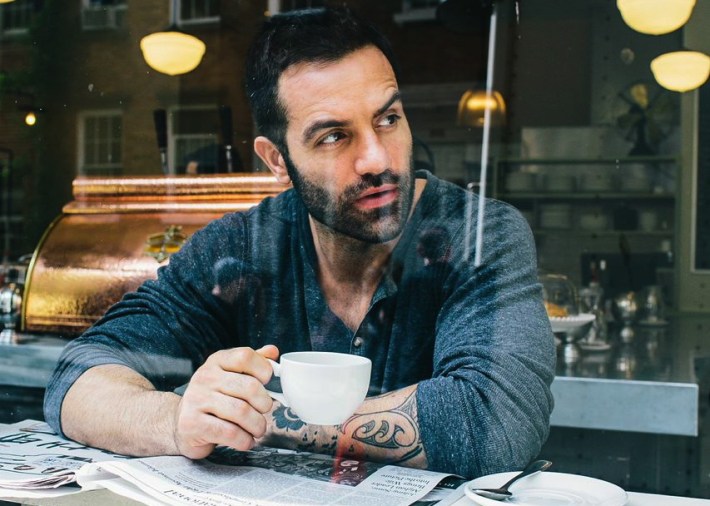
I would be lying if I said I didn’t have the hugest crush on Ramin Karimloo, a Broadway and West End actor and performer, when I was sixteen. I was and will always be a musical theatre girl, so you can keep your Biebers and Directioners. I was in love with a real man, who was also British (technically Canadian, but he spent most of his time in Britain, so same thing.) He also has pipes like none other. My first exposure to this wonderful man (did that sound bad the way I put it?) was his performance of Enjolras in the 25th Anniversary recording of Les Miserables (live at the frickin O2 arena.) My second encounter was through the much debated sequel to The Phantom of the Opera. Karimloo sang the part of the Phantom in the original cast of Love Never Dies. His vocals had me on the ground, Tina-from-Bob’s-Burgers-style.
When I was in 10th grade, Karimloo released his first solo album. Some of the tracks were singer-songwriter-y versions of Broadway tunes (i.e., Music of the Night, because he slays that song in the best way) but most are original works by Karimloo himself. As soon as I got my teenage paws on it, it was all I listened to. And it was the absolute best thing I’d ever listened to.
When I listen to it now, I find it charming but slightly gimmicky. Karimloo was definitely still finding his voice, literally and figuratively, as a solo artist. But 16-year-old Audrey was all about that album.
As fate would have it, I was able to see him in Chicago in the fall following his album release. My brother had just started school there, so my family made a trip to “see him,” but for me it was actually to see Ramin. Your girl was so stoked. Honestly, I don’t remember much of that night because I was in complete euphoria, and I took some awful pictures on my flip phone (so I don’t have any photo evidence, unfortunately) but at the end of the night, when Ramin was making his way backstage at the end of the set –
He looked right at me.
I’ve been blessed ever since.
In all honesty, I have a lot to thank Ramin for. First off, my ridiculous expectations for a potential husband. But more importantly, my taste in music. Before Ramin’s album, teenage Audrey listened almost exclusively to Broadway recordings and film scores. Those aren’t the worst things to listen to, but at sixteen Audrey really should have been more cultured than that. Ramin’s first album got me into probably 80% of what I listen to today (don’t worry, I still have playlists devoted to showtunes and cinema scores.) I think of Karimloo’s album as a bridge between my old tastes and my newer, more refined ones.
Which brings me to my favorite song on the album (excuse me while I fangirl):
Day Five: Song of the Human Heart – Ramin Karimloo
The sixth track on Ramin’s album was the most infectious to me. I could call it somewhat serendipitous, but that’s probably just because I loved it from the first time I listened to it. I had no idea what the words meant, but the aural quality and ethereal aesthetic captured me instantly.
The party’s begun
But your heart is all numb tonight
The music it won’t sing to you
The thoughts won’t leave your mind
But there is a sound
A sound somewhere singing
There it’s in the willows
There it’s where the wind blows
On the river, in the open
It sings of all we are
In the song of the human heart
Something in the song evokes a lullaby – the chill drum backbeat, the lingering keys and strings. The more I’ve listened to this song over the years (I’ve realized it’s been six years since I turned sixteen. Yikes) the more I realize it could be about depression – and maybe that’s why I loved it so much as a teen. Not simply because I loved the musical quality, but I also resonated with the words. Summer of 2012 was also the summer I was diagnosed with a clinical form of depression.
The dark enfolds and
Ferries you over
Buries your sorrows
Within its song
The throng emotion
With no rest to follow
All they know is
Something’s gone
The chorus seems to evoke the chaos in someone’s mind (and around them) during a depressive episode. Even though there might be a “party” going on, they can’t focus on that. Their thoughts are far away. But the song of the human heart is much more complex than that. Maybe they’re not sad, maybe they’re just longing. Longing for something beyond a “throng emotion.” You can only be fake happy for so long before it exhausts you.
Toward the end of the song, Karimloo starts singing about harvest, in the most lullaby-esque portion of the song. It’s rhythmic and enchanting, like it’s meant to lull you to sleep:
Harvest done
Frost on the bloom tonight
Hardly a star
Just half a moon tonight
I’m not sure what this part of the song means. And maybe it doesn’t have to mean anything. It may just serve to ease a troubled mind.
Sixteen year old Audrey understood but didn’t quite appreciate the power of music, even when she was seeing her idol perform it onstage. But looking back, I can see how much that album (and more specifically, song) changed me – after all, it did essentially change my entire taste in music. After delving into indie folk, I found friends in Mumford and Sons, Glen Hansard, and the Head and the Heart (you’ll hear from them before this 30-day journey is over.) And somewhere in those vague lyrics and infectious tune, I think I found a little part of myself too.
Even if it was just because the singer was really hot.
 Audrey D. DeBoer
[…] Day Five: Song of th… on Day 3: She Used to Be Mine… […]
LikeLike